This is our work: Manuel, Juan and Hugo
CLICK HERE
28 May 2019

20 May 2019
28 April 2019
OPENING WORLD CUP RUSIA 2018:
The inauguration of the world cup of Rusia 2018 was one of the most seen events of the sport o date.
The football world cup is an event very famous where many countries from all the world participate and they are celebrate every four years. First there is a qualifying phase for all countrien of the world except the host that enters directly. Then the classifieds played a group phase. Then the first and the second teams qualify to play eight of finals, quarters, semifinals and the final. The first World Cup was in 1930, in 1942 and in 1946 the world cup was not played becouse was the second world war. Spain won the world cup in 2010. The last World Cup was in Russia. The country that more world cup has won has been Brasil with five World cups, ¡That's a lot!
The author was Robbie Williams, he's a very famous singer from England, he born in 1974 and he sing songs like: Angels, Feel, Love my life... Robbie is associated with pop music.
25 April 2019
SELF-ASSESSMENT MUSIC
1- WHAT CAN I DO THAT I COULDN'T DO BEFORE?
I can study more and do better the exams.
2- WHAT DO I LIKE MOST?
I like most to play the recorder and do rythims.
3- WHAT DO I DO WELL?
I play the recorder well.
4- WHAT AM I CONFUSED ABOUT?
I' m confused about the musical textures.
5- WHAT DO I NEED HELP WITH?
I need help with the musical textures and a liitle help with the rythims.
6- WHAT DO I DO IN ENGLISH AND/OR MUSIC OUTSIDE THE CLASS?
I went to the music school and I play the saxophone.
7- WHAT DO I NEED TO IMPROVE?
I need study a little bit more.
8- WHAT DID I LEARN ABOUT CULTURE?
I learn a lot of things about the pop, rock and some artists and music in the 60's,
MUSIC VOCABULARY III
Genre: género.
Folk music: música folclórica.
World music: músicas del mundo.
Popular music: música popular.
Vinyl record: disco de vinilo.
Sacred music: música sacra.
Dance music: música de danza.
Soundtrack: banda sonora.
Choreography: coreografía.
Ballet: ballet.
Stage: escenario.
Improvisation: improvisación.
Flamenco: flamenco.
Synthesizer: sintetizador.
Middle Ages: Edad Media.
Renaissance: Renacimiento.
Baroque: Barroco.
Classicism: Clasicismo.
Romanticism: Romanticismo.
Impressionism:Impresionismo.
Twentieth Century Music: Música del Siglo XX.
Triplet: tresillo.
Anacrusis note: nota anacrúsica.
Fret: traste.
Gregorian chant: canto gregoriano.
Opera: ópera.
Program music: música programática.
Gothic Rock: Rock Gótico.
New Wave: "nueva ola".
Symphony: sinfonía.
Mass: misa.
Consonance:consonancia.
Dissonance: disonancia.
Theme: tema musical (principal).
Stress: acento.
Reed: lengüeta.
Polyphony: polifonía.
10 April 2019
VOCABULARY UNIT 6
Fashion buyer→Comprador de la moda
Journalist→Periodista
Film producer→Productor de películas
Events organizer→Organizador de eventos
Shop assistant→Asistente de tienda
Journalist→Periodista
Film producer→Productor de películas
Events organizer→Organizador de eventos
Shop assistant→Asistente de tienda
7 April 2019
ASTON VILLA
The club has got a lot of fans.
Gordon Cowe's the coach of the team.
Aston Villa won the European Cup in 1982.
Gordon Cowe's played 14 years old for Astn Villa.
The club started in 1818.
Scott Bridge's been at Aston Villa since he's 11 years old.
Scott Bridge's played football since he has 5 years old.
His ambition is to play for his country in the World Cup.
Young players are very important for Aston Villa.
Scott Bridges is are of Aston Villa's best young players.
25 March 2019
SELF-ASSESMENT: SECOND TERM
- What can I do now that I couldn't do before?
- What do I like most?
- What do I do well?
- What am I confused about?
- What do I need help with?
- What do I do in English outside the class?
- What do I need to improve?
- What did I learn about culture?
16 March 2019
15 March 2019
VOCABULARY: BOOK TUTANKHAMUN (SECOND PART)
CHAPTERS 7-8:
Pain →Dolor
Was over→Se acabó
Couple→Pareja
Bury→Enterrado
Peg→Clavija
Afterlife→Después de la vida
CHAPTERS 9-10:
Slaves→Esclavos
Mummy→Momia
Lead→Plomo
Casket→Ataúd
Affairs→Asuntos
Proud→Orgulloso
CHAPTERS 11-12:
Truth→Verdad
Sarcophagus→Sarcófago
Guests→Invitados
Wish→Deseo
Missed→Echar de menos
Pain →Dolor
Was over→Se acabó
Couple→Pareja
Bury→Enterrado
Peg→Clavija
Afterlife→Después de la vida
CHAPTERS 9-10:
Slaves→Esclavos
Mummy→Momia
Lead→Plomo
Casket→Ataúd
Affairs→Asuntos
Proud→Orgulloso
CHAPTERS 11-12:
Truth→Verdad
Sarcophagus→Sarcófago
Guests→Invitados
Wish→Deseo
Missed→Echar de menos
14 March 2019
VOCABULARY: UNIT 4:
Earn→Ganar
Pocket money→Paga
Messy→Desorganizado
Net→Red
Crawl→Gatear
Hop→Salto
Notes→Billetes
Prize money→Dinero en efectivo
Pocket money→Paga
Messy→Desorganizado
Net→Red
Crawl→Gatear
Hop→Salto
Notes→Billetes
Prize money→Dinero en efectivo
4 March 2019
H. PROYECT III
1. What period does the Middle Ages cover?
The Middle ages goes from 476 to 1453.
2. What general characteristics does it have (according to the teacher's comments)?
They wrote music in the churches and they invented the medieval music.
3. What is the main different between "troubadors" and "minstrels"?
The troubadors is a high birth person who dedicated himself to compose, shape and interpret his works for a didactic and entretainment purpose, and the minstrels are street artists who memorized and orally recited the themes of popular tradition. His performances were often accompanied by mimics and dramatizations.
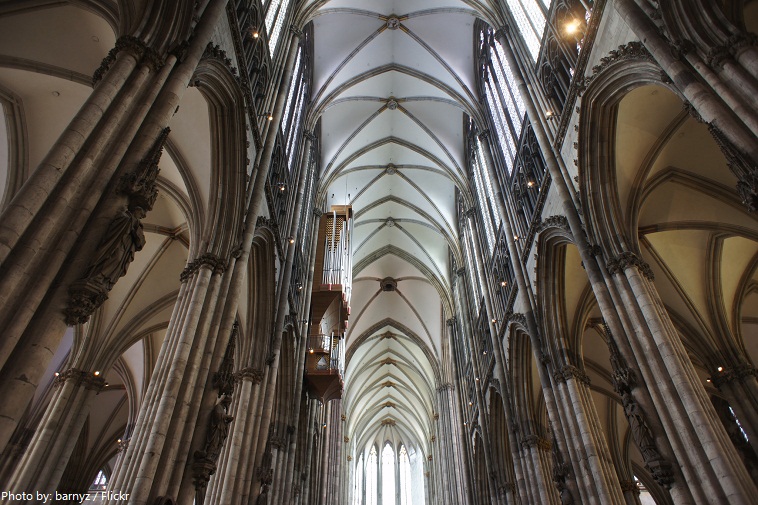
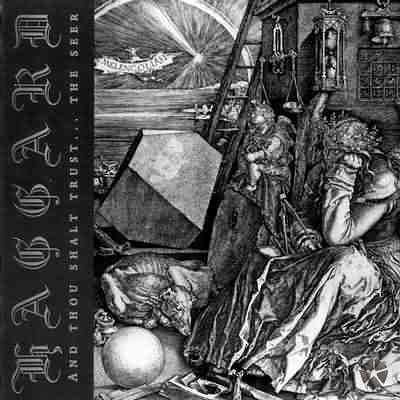
4. Pay attention to these two monuments (a Romanic church and a Gothic cathedral). What do their different heights have in common with the music evolution of those centuries?
The romanic church have little arcs and have mainus high than the Gothic cathedral, it has a high roof and high arcs.

5. What do you feel looking at these pictures (taken from the 19th century but directly linked to the Middle Ages)? In your own opinion, what kind of music could accompany these images?
The music can acompained this pictures is like ceremony and homophonic music.
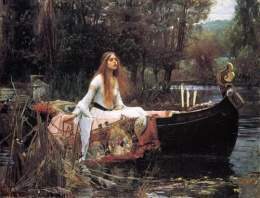
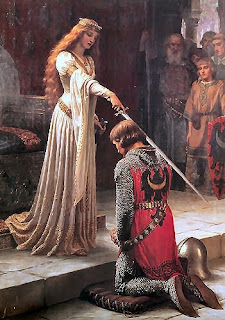
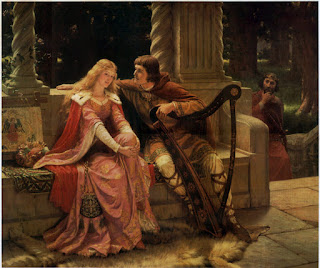
6. Why does Heavy Metal music love this aesthetic?
Becouse it has high sound and is very distorsionated and this photos are very expresive, the dragon is very strong like the heavy metal.


The Middle ages goes from 476 to 1453.
2. What general characteristics does it have (according to the teacher's comments)?
They wrote music in the churches and they invented the medieval music.
3. What is the main different between "troubadors" and "minstrels"?
The troubadors is a high birth person who dedicated himself to compose, shape and interpret his works for a didactic and entretainment purpose, and the minstrels are street artists who memorized and orally recited the themes of popular tradition. His performances were often accompanied by mimics and dramatizations.
4. Pay attention to these two monuments (a Romanic church and a Gothic cathedral). What do their different heights have in common with the music evolution of those centuries?
The romanic church have little arcs and have mainus high than the Gothic cathedral, it has a high roof and high arcs.
5. What do you feel looking at these pictures (taken from the 19th century but directly linked to the Middle Ages)? In your own opinion, what kind of music could accompany these images?
The music can acompained this pictures is like ceremony and homophonic music.
6. Why does Heavy Metal music love this aesthetic?
Becouse it has high sound and is very distorsionated and this photos are very expresive, the dragon is very strong like the heavy metal.
23 February 2019
MY MEALS
Today I eat:
- Toast with cheese
- Nutella sandwich
- Apple
- Spanish stew
- Chocolate
- Strawberries
- Croquettes
- Salad
- Milk
18 February 2019
VOCABULARY: UNIT 3
Chest→Pecho
Wrist→Muñeca
Decrase→Disminución
Fuel→Combustible
Nut→Nuez
Survey→Encuesta
Weak→Débiles
Algae→Algas
Wrist→Muñeca
Decrase→Disminución
Fuel→Combustible
Nut→Nuez
Survey→Encuesta
Weak→Débiles
Algae→Algas
FUTURE TENSES

PHRASES WITH "WILL":
- It`s cloudy. We won`t go to the swimming pool.
- The other team is very bad. We will win the match.
- She is pregnant. She is going to have a baby.
- We bought the tickets. We`re going to see the match.
10 February 2019
VOCABULARY II
Musical meaning: significado musical. Dot: puntillo.
Rhythm: ritmo. Ligature: ligadura.
Dot: puntillo. Snare drum: caja.
Drums: batería. Clap: palmada.
Bar: compás (el espacio del pentagrama). Orchestra: orquesta.
Time signature: compás (la fracción numérica). Conductor: director.
Tempo: "tempo". Ensemble: formación musical.
Chordophone: cordófono. Aerophone: aerófono.
String: cuerda. Bow: arco.
Rub: frotar. Pluck: pulsa, puntear.
Guitar pick: púa. Viola: viola.
Violoncello: violonchelo. Double bass: contrabajo.
Tuning peg: clavija. Harp: arpa.
Brass: viento metal. Woodwind: viento madera.
Mouthpiece: boquilla. Saxophone: saxofón.
Oboe: oboe. Clarinet: clarinete.
Trumpet: trompeta. French horn: trompa.
Percussion: percusión. Amplifier: amplificador.
Soprano: soprano. Mezzo-soprano: mezzo-soprano.
Tenor: tenor. Baritone: barítono.
Grand piano: piano "de cola". Kettle drum: timbal.
14 January 2019
BOOK: TUTANKHAMUN:
Chapters 1 and 2:
- Chef→Jefe.
- Advisor→Consejero.
- Anthem→Himno.
- Filled→Lleno.
- Excitement→Emoción.
- Chariots→Carros.
- Wrestling→Lucha libre
- Sword fighting→Lucha con espadas
- Luxurius→Lujosa
- Weak→Débil
- Chariot→Carruaje
- Swung→Blandía
- Wedding→Boda
- Bride→Novia
- Fan→Abanico
- Ostrich→Avestruz
- Proud→Orgulloso
- Brave→Valiente
SECOND TERM:

My new year´s resolutions are:
- Get more organized.
- Study more and have good marks.
- Spend more time with family and friends.

13 January 2019
SELF-ASSESSMENT
1- WHAT CAN I DO THAT I COULDN'T DO BEFORE?
Some rythims with my feets, legs and hands.
2- WHAT DO I LIKE MOST?
Play the recorder.
3- WHAT DO I DO WELL?
I play the recorder well.
4- WHAT AM I CONFUSED ABOUT?
I´m confused in do rythims.
5- WHAT DO I NEED HELP WITH?
I need help with the rythims.
6- WHAT DO I DO IN ENGLISH AND/OR MUSIC OUTSIDE THE CLASS?
I went to the music school and I go individual classes of englis.
7- WHAT DO I NEED TO IMPROVE?
I need to improve in the rythim.
8- WHAT DID I LEARN ABOUT CULTURE?
I learned about some types of music.
10 December 2018
SELF-ASSESSMENT
What can I do that I couldn't do before?
I can write texts with more vocabulary and bettter grammar.
What do I like most?
I like that the classes are entertaining.
What do I do well?
What do I do well?
I do better the readings and listenings.
What am I confused about?
I´m confused in the translate and in the writting.
I´m confused in the translate and in the writting.
What do I need help with?
I need help with translate and writting.
I need help with translate and writting.
What do I do in English outside the class?
I go to english classes.
I go to english classes.
What do I need to improve?
I need to improve in the translation.
I need to improve in the translation.
What did I learn about culture?
I learnd a lot of the Thanksgiving day.VOCABULARY: UNIT 2
Cardboard→Cartulina
Cotton→Algodón
Leather→Cuero
Rubber→Goma
Wool→Lana
Bowl→Cuenco
Tin→Tarro
Cotton→Algodón
Leather→Cuero
Rubber→Goma
Wool→Lana
Bowl→Cuenco
Tin→Tarro
28 November 2018
THEORETICAL EXERCISES FIRST EVALUATION
1. - What is strength as basic physical ability? How many types of strength are there? Explain them and give an example of each of them.
The strength is the physical ability to perform a physical job or a movement.
The strength is the physical ability to perform a physical job or a movement.
There are three types of strength:


- Maxium strength: Is the maximum force a muscle can exert in a single maximalvoluntary contraction. It is used during weightlifting.
- Explosive strength: Explosive strength is the ability to exert maximal force in minimal time. To develop explosive strength and reactive ability you need to do two things. First, you must build your speed strength and second, in the same time frame, you must raise your absolute strength.
- Endurance strength: The ability to maintain muscular contractions or a consisten level of muscle force for extended periods of time. Relies upon aerobic efficiency to supploxygen and nutrients to the working muscles while removing metalobic waste. Examples: An endurance event like a 10K, marathon or triarlon; doing yard work or orther vigorous household chores; high volume bodybuilding-type trainning.
2. - What is flexibility as basic physical capacity? What factors does flexibility depend on?
The flexibility is the ability that allows body movement in all its range.
The factors on which the elasticity depends are:
- Joint mobility or movement possibilities of the joint: The characteristics of each articulation determine the amplitude of the movements that can be achieved in each one of them.
- Muscle elasticity: The muscle subjected to a sufficient force yields and increases its length, once the cause that caused this lengthening has given way, the muscle returns to its primitive extension. This ability of the muscle to elongate and then return to its initial state, is what is called "elasticity".
- Intermuscular cordination: In any movement, even when carried out with an objective of development of flexibility; This is the result of the joint participation of different muscle groups that must act in an orderly manner in terms of time and tension. If this were not so, the movement would not be synchronized, would be uncoordinated, and would reduce its amplitude by interferences, wihch would act as a brake, between the muscle groups.In any movement, even when carried out with an objective of development of flexibility; This is the result of the joint participation of different muscle groups that must act in an orderly manner in terms of time and tension. If this were not so, the movement would not be synchronized, would be uncoordinated, and would reduce its amplitude by interferences, which would act as a brake, between the muscle groups.
- The age: Children are more flexible than adults, and this is because overtime, with the maturation of the subject, there is a progressive loss of extensibility of the muscles and ligaments.
Endurance is the ability to maintain physical effort for a long time.
- Anaerobic endurence: Anaerobic endurence training focuses on physiological improvements in the ability of muscles to support the production of force through neuronal and metabolic mechanisms. It is done in a short time but at a lot of intensity. Example: 100m at your maxium speed.
- Aerobic endurance: It is a training with less intensity than the anaerobic but much longer. Example: Rotate a circuit running at a normal speed.
Exercises:
- Farleck: You run arround a rectangle for 20-30 minutes and run as fast as you can on the small side and jog on the long sides.
- Swim: You swimming arround 20-30 minutes.
26 November 2018
SONG: BLOWING IN THE WIND
How many times you must to read
Before you understand a thing
How many trains do you have to do
Before you winning a match
How many hours will you have to study
Before you pass a exam
How much music will you have to listen
Before you create a song
How long will you have to walk
Before cross the finish line
How much time will you have to dedicate
Before you dream to reach
E. PROJECT II
- How would you describe the "program music"? (2 or 3 lines are enough).
Program music is a type of art music that attempts to musically render an extra-musical narrative. The narrative itself might be offered to the audience in the form of program notes, inviting imaginative correlations with the music.
- Choose one of the next examples (worked already a bit in Music classes) and do some research about the composer (4 or 5 lines are enough).
Antonio Vivaldi born on March 4, 1678, in Venice, Italy and he died on july 28, 1741. He was a Italian violinist, teacher and priest of the 18th century. He has composed more than 750 musical works. Around 350 of his concerts are written for solo instrument and strings, of which 230 are for violin. Some of his more important works are: The four seasons, Gloria and La Stravaganza.
- This is the musical piece we are playing in the class. Do you believe the composer transmits the title meaning in a good manner? Why?
Yes, becoause is very happy and it´s like a sunrise. Is very impulsive and sometimes it is strong and other times weaker.
25 November 2018
D. PROJECT I
Wich one do you prefer? Why? (2 or 3 lines are enough).
The one I like the most is the third video because I like the music from behind and the voice of the singer because it is deep and beautiful. I like the first video but I prefer the third. I don´t like the second because there are many voices.

The one I like the most is the third video because I like the music from behind and the voice of the singer because it is deep and beautiful. I like the first video but I prefer the third. I don´t like the second because there are many voices.
1)
2)
3)
Who was Bob Dylan? (2 or 3 lines enough).
Robert Allen Zimmerman, better known as Bob Dylan, was born in Duluth, Minnesota (United States) on May 24, 1941. He is an American singer-songwriter, author, and artist.
He has written and sung songs like Blowing in the Wind and Like a rolling stone.
- In Music classes I have told you about the sixties and the music of that period, including some videos. If you paid attention, you will be capable of writing down a summarize. (4 or 5 lines are enough.
In the sixties in America they listened to blues, jazz, ragtime and other regional styles.
In that same decade there was a countercultural movement called hippie or hippy, was libertarian and pacifist.
The most listened to artists at that time were: The Beatles, The doors, Jefferson Airplane and The Beach Boys.
Subscribe to:
Posts (Atom)